What is the difference between rutile titanium dioxide and anatase titanium dioxide

Titanium dioxide is mainly divided into three types: plate titanium dioxide, anatase titanium dioxide, and rutile titanium dioxide. Rutile titanium dioxide and anatase titanium dioxide are two important types of titanium dioxide, which are currently the most widely used in the market. However, their properties differ greatly.

titanium dioxide nanopowder
Difference in Chemical property


Titanium dioxide has extremely stable chemical properties and is a slightly acidic amphoteric oxide. At room temperature, it hardly reacts with other elements and compounds, and has no effect on oxygen, ammonia, nitrogen, hydrogen sulfide, carbon dioxide, and sulfur dioxide. It is insoluble in water, fat, dilute acids, inorganic acids, and bases, and only soluble in hydrofluoric acid. But under the action of light, titanium dioxide can undergo continuous oxidation-reduction reactions and has photochemical activity. This photochemical activity is particularly evident in rutile type titanium dioxide under ultraviolet irradiation, which makes titanium dioxide both a photosensitive oxidation catalyst for certain inorganic compounds and a photosensitive reduction catalyst for certain organic compounds.
Rutile type has better powder resistance and light retention than anatase type. However, the surface of pure TiO2 (anatase titanium dioxide) particles is photochemically active in the presence of water vapor and oxygen, rather than being inherently photochemically stable. Pure TiO2 can even promote the degradation of the substrate around its particles. Therefore, it is necessary to first stabilize TiO2 itself with light. The stability can be determined by controlling the type and amount of different inorganic oxides. Inorganic coating treatment is applied to TiO2. Forming a shielding net between the surface of TiO2 particles and the organic resin no longer promotes (reduces) the degradation of the organic resin.
The chemical name for titanium dioxide is titanium dioxide (TiO2), which is the best type of white pigment. Compared with anatase titanium dioxide, rutile titanium dioxide has the following advantages:
(1) High refractive index
The refractive index of rutile type is 2.71, and the refractive index of anatase type is 2.52. Therefore, the former has better coverage and glossiness than the latter.
(2) Different crystal structures
Rutile type crystals have a dense structure, stable specific ratios, low photochemical activity, and therefore good weather resistance. Whether it is rutile or anatase titanium dioxide, in the visible light wavelength range (400-700nm), they have an impact on
The reflectivity of light is high, therefore it has good whiteness. However, in the wavelength range of ultraviolet light, such as 300-400 nanometers, which is smaller than the visible light range, there is a significant difference in the performance exhibited by the two different crystal forms. For rutile (red line) in the highly lethal UVA band (350-400m), its reflectivity for ultraviolet radiation is much lower than that of blue anatase type. In other words, its absorption rate for ultraviolet radiation is much higher than that of blue anatase type. In this case, the organic resin surrounding it has to share much less ultraviolet light.


Difference in Application


Plate titanium is an unstable crystal form with no industrial value. Anatase, abbreviated as A type, and Rutile, abbreviated as R type, both have stable crystal lattices and are important white pigments and porcelain glazes. Compared with other white pigments, they have superior whiteness, coloring power, covering power, weather resistance, heat resistance, and chemical stability, especially without toxicity.
Sharp titanium dioxide, also known as A-type titanium dioxide. It is an excellent white powder pigment with good light scattering ability, resulting in good whiteness, strong coverage, and high chemical stability. It is non-toxic, odorless, and has no irritating effect on the human body. It is widely used in many industrial fields, such as coatings, plastics, photocatalysis, batteries, papermaking, and inks.
Rutile titanium dioxide, also known as R-type titanium dioxide. Based on the experience of quality control in the production of pyrite type titanium dioxide by sulfuric acid method, innovative research has been conducted on inorganic coating, organic treatment, salt treatment, calcination control, hydrolysis and product application. Advanced color and particle size control, zirconium silicon aluminum phosphorus multi-element inorganic coating and new organic treatment technology have been adopted to develop a new generation of high-end universal (slightly water-based) rutile titanium dioxide. Suitable for various industries such as architectural coatings, industrial paints, anti-corrosion paints, cosmetics, inks, batteries, powder coatings, etc.


SAT NANO is a best supplier of titanium dioxide nanopowder in China, we can offer 5nm, 30nm, 50nm and 100nm, if you have any enquiry, please feel free to contact us at admin@satnano.com
What is the surface modification method for ultrafine silicon carbide powder

Ultra fine silicon carbide powder is an excellent inorganic material with excellent characteristics such as high chemical inertness, high hardness, and high melting point, making it widely used in the manufacturing industry. However, due to its low surface activity, it is difficult to achieve its excellent performance in certain industrial application scenarios. Therefore, the study of surface modification methods for ultrafine silicon carbide powder is of great significance.

silicon carbide

This article will introduce two surface modification methods for ultrafine silicon carbide powder, and test and characterize the modified powder.


Firstly, the method of modification through polyelectrolyte is introduced. This method uses cationic polyelectrolyte polydimethylammonium chloride (PDADMAC) or anionic polyelectrolyte sodium polystyrene sulfonate (PSS) to modify ultrafine silicon carbide powder. The specific process involves stirring PDADMAC or PSS with SiC powder in deionized water for 6 hours, then centrifuging at 3500rpm for 10 minutes, and drying the centrifuged powder at 90 ℃ for 12 hours to obtain polyelectrolyte modified SiC powder. This method can form a polyelectrolyte layer on the surface of ultrafine silicon carbide powder, increase surface activity, and improve its stability and dispersibility.


Secondly, the method of using surfactants for modification is introduced. This method uses non ionic surfactant octadecylamine polyoxyethylene ether (AC1830) and anionic polyelectrolyte sodium polystyrene sulfonate (PSS) to jointly modify silicon carbide. The specific operation method is to use a magnetic stirrer to mix 50g of original silicon carbide powder with 50ml of deionized water; Stir the mixture for 0-6 hours; Add 0.1-1.5wt% AC1830 (based on the mass of SiC powder) and stir the slurry for 0-6 hours; In order to minimize the negative effects caused by excessive modifiers, centrifuge the slurry at 3500rpm for 5 minutes, remove the supernatant, disperse the precipitate back in 50ml of deionized water, and then centrifuge again; Dry the precipitate in a 90 ℃ oven for 12 hours, grind it to obtain SiC powder modified with AC1830; Repeat the above operation using PSS; Finally, the modified silicon carbide powder is uniformly dispersed in deionized water to obtain a modified silicon carbide slurry. This method can form a surfactant molecular layer, improve the surface properties of ultrafine silicon carbide powder, and enhance its stability, dispersibility, and usability.

When testing and characterizing the modified ultrafine silicon carbide powder, SEM, XRD, particle size distribution, slurry viscosity, solid content, Zeta potential and other methods were mainly used. Among them, SEM observation results show that the surface of the modified silicon carbide powder is smoother and the particles are more uniform. The XRD test results showed that the crystallization performance of the modified silicon carbide powder did not change. The particle size distribution results show that the modified silicon carbide powder has a more uniform particle distribution and a more stable particle size. The test results of slurry viscosity, solid content, Zeta potential and other indicators also show that the modified silicon carbide powder has better dispersibility and stability.

silicon carbidesilicon carbide

Modification effect: (1) PDADMAC is adsorbed onto the surface of SiC particles through electrostatic attraction interaction. Due to the high affinity adsorption between the two, the adsorption configuration of PDADMAC on SiC surface is flat, and the adsorption amount, adsorption configuration, and modification effect do not change with the change of molecular weight. The modified pH value is 11, the addition amount is 0.24wt%, the temperature is 90 ℃, and the modification time is 6 hours. Because the adsorption of PDADMAC makes the charge on the surface of SiC reverse, the modified SiC powder is dissolved in water medium to adjust the pH value to 3, and the modified SiC powder is uniformly dispersed in water medium through the electrostatic steric stabilization mechanism, and 50 vol.% is prepared SiC slurry with a viscosity of 0.138Pa. s under solid phase content. (2) Sodium polystyrene sulfonate (PSS) is adsorbed onto the surface of SiC particles through hydrogen bonding and van der Waals forces. Due to the electrostatic repulsive interaction between the two, the adsorption configuration of PSS on the surface of SiC is circular and tail shaped, and as the molecular weight of PSS increases, its circular configuration on the surface of SiC particles expands, the adsorption capacity increases, and the modification effect improves. Using PSS with a molecular weight of Mw=1000000, the pH value is not adjusted during the modification process. The addition amount is 0.3wt%, the temperature is 90 ℃, and the modification time is 6 hours. The modified SiC powder was dissolved in the water medium, and the pH value was adjusted to 11. The modified SiC powder was uniformly dispersed in the water medium through the electrostatic steric stabilization mechanism. A SiC slurry with a high solid content (45vol.%) was obtained, corresponding to a slurry viscosity of 0.098Pa. s. (3) Non ionic surfactant octadecylamine polyoxyethylene ether (AC1830) and anionic polyelectrolyte sodium polystyrene sulfonate (PSS) were used as modifiers to modify silicon carbide powder. The adsorption of AC1830 is not affected by surface charges, can shield some charges, and can serve as an adsorption site for PSS, promoting the adsorption of PSS on SiC surface. Prepared a viscosity of 0.039Pa. s and a solid content of 50vol.% SiC slurry suitable for injection molding. The Zeta potential method indicates that the isoelectric point (IEP) of SiC powder modified by this method is significantly shifted to the left. The settlement experiment shows that the dispersion stability is significantly improved. The contact angle measurement shows that the modifier successfully adsorbs on the surface of the powder and provides hydrophilic groups, thereby improving the wettability of the powder. The adsorption test results indicate that the isothermal and kinetic adsorption models of PSS on SiC powder and AC1830 modified SiC powder conform to the Langmuir model and pseudo second order (PSO) model. The adsorption of AC1830 on SiC surface improved the adsorption capacity of PSS.


SAT NANO can supply high quality Ultra fine silicon carbide powder 50nm, 100nm, 1-3um particle size, if you have any enquiry, please feel free to contact us at admin@satnano.com
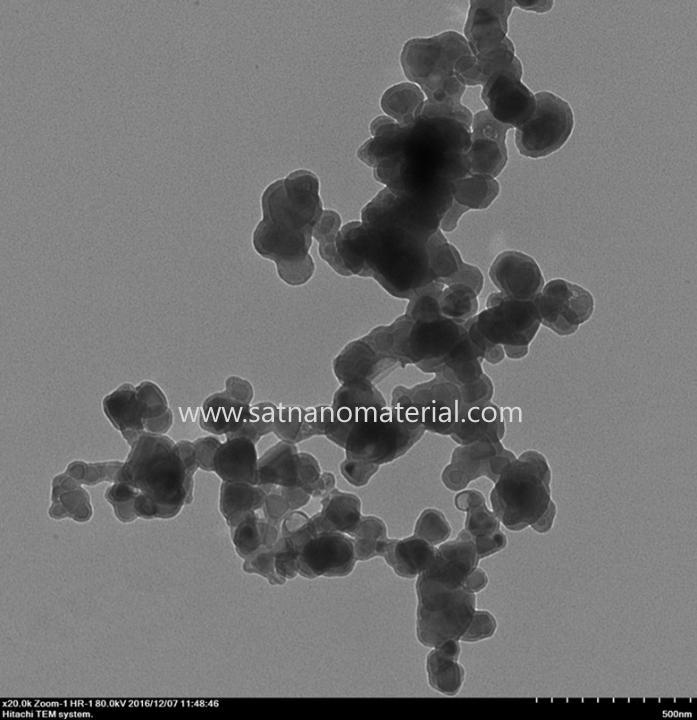
What nanomaterials can be used as antibacterial agents for textile fabrics

1. Antibacterial agents and their classification


Antibiotics refer to drugs that can inhibit bacterial growth, damage their living environment, and effectively and continuously exert their effects. Antibacterial agents are divided into two categories: organic antibacterial agents and inorganic antibacterial agents. Among them, organic antibacterial agents include natural and synthetic types, while inorganic antibacterial agents mainly include metals, metal ions, and oxides. The commonly referred to antibacterial measures include inhibition, killing, elimination of toxins secreted by bacteria, and prevention. Due to the strong thermal stability, long-lasting functionality, and safety and reliability of inorganic antibacterial agents, coupled with the development of ultra-fine technology in recent years, nanoscale inorganic antibacterial agents can be mass-produced and blended or composite into chemical fibers, ensuring the industrialization of antibacterial chemical fibers.

tio2 dispersion

2. Nano antibacterial agents

Photocatalytic properties are one of the important characteristics of nano semiconductor materials. Common semiconductor compound materials include TiOz, ZnO, ZnS, CdS&PbS, etc. Considering safety and cost factors, TiO2 and ZnO have better practicality, with TiO2 being the most commonly used.
The absorption wavelength threshold of semiconductors is mostly in the ultraviolet region. When the photon energy exceeds the semiconductor absorption threshold, the valence band electrons of the semiconductor undergo interband transitions, that is, transitions from the valence band to the conduction band, resulting in the generation of photo generated electrons (e) and holes (h+). At this point, the dissolved oxygen adsorbed on the surface of the nanoparticles captures electrons to form superoxide negative ions (· 05), while the holes will oxidize the hydroxide ions adsorbed on the catalyst surface and water to form hydroxide radicals (· OH). Both superoxide negative ions and hydroxide radicals have strong oxidizing properties, which can oxidize the vast majority of organic matter to the final products CO2 and H2O. During the reaction process, this semiconductor material, also known as the photocatalyst itself, does not undergo any changes.
Numerous studies have shown that adding some nano ZnO to nano TiO2 or adding some nano TiO2 to nano ZnO results in better antibacterial effects on fabrics compared to single nano materials, indicating the existence of nano synergistic effects between nano TiO2 and ZnO. This is due to the surface atoms of nano TiO2 and ZnO
The surface effects of particles vary due to different environments and bandgap widths, therefore, the absorption of light, especially ultraviolet radiation, has its own characteristic bands. When cotton fabrics are treated with nano TiO2 and ZnO composites, they can absorb ultraviolet radiation over a wider wavelength range, decompose more freely moving negatively charged electrons and positively charged holes, and form photo generated electron hole pairs. They react with surrounding water and oxygen to generate more 0-, HO ·, HOO ·, and H2O2, effectively killing bacteria and improving the antibacterial effect of the fabric.

Nano TiO2 as a bactericide also has the following characteristics: firstly, it has good immediate effect, such as the effect of silver series antibacterial agents occurring in about 24 hours, while nano TiO2 only takes about 1 hour; Secondly, TiO2 is a semi permanent antibacterial agent that maintains its antibacterial effect, unlike other antibacterial agents whose dissolution effect gradually decreases; Thirdly, it has good safety and no adverse effects on skin contact. The textile made by dispersing nanoscale ultra-fine TiO2 into spinning raw materials and spinning chemical fibers has good antibacterial properties and is cheap. Therefore, nanoscale TiO2 is widely used as the main antibacterial and deodorant in functional fibers.

tio2 dispersion

3.Metal ion antibacterial agents

Compared with organic antibacterial agents, metal ion antibacterial agents have the advantages of good safety (low toxicity, no carcinogenicity), high antibacterial activity, good heat resistance, wide antibacterial range, long persistence, and no drug resistance. They can be widely used in fields such as electronics, automobiles, building materials, water treatment, medical treatment, food, feed, packaging, textiles, and environmental protection.
According to the different metal ions contained, metal ion antibacterial agents can be divided into silver ions, copper ions, zinc ions, cobalt ions, nickel ions, vanadium ion antibacterial agents, etc.

Some metal particles (such as silver nanoparticles and copper nanoparticles) have certain bactericidal properties. They are spun in combination with chemical fibers to produce antibacterial functional fibers, which have stronger antibacterial effects and more washing times than general antibacterial fabrics. For example, ultrafine antibacterial powder can endow resin products with antibacterial ability and have inhibitory effects on various bacteria, fungi, and molds. Adding 1% of this powder to synthetic fibers can produce antibacterial fibers with good spinnability.


SAT NANO is one of the best supplier of Nano antibacterial agents, we can offer tio2 dispersion, zno dispersion, sio2 dispersion, silver doped tio2 dispersion and copper doped tio2 dispersion, if you have any enquiry, please feel free to contact us at admin@satnano.com
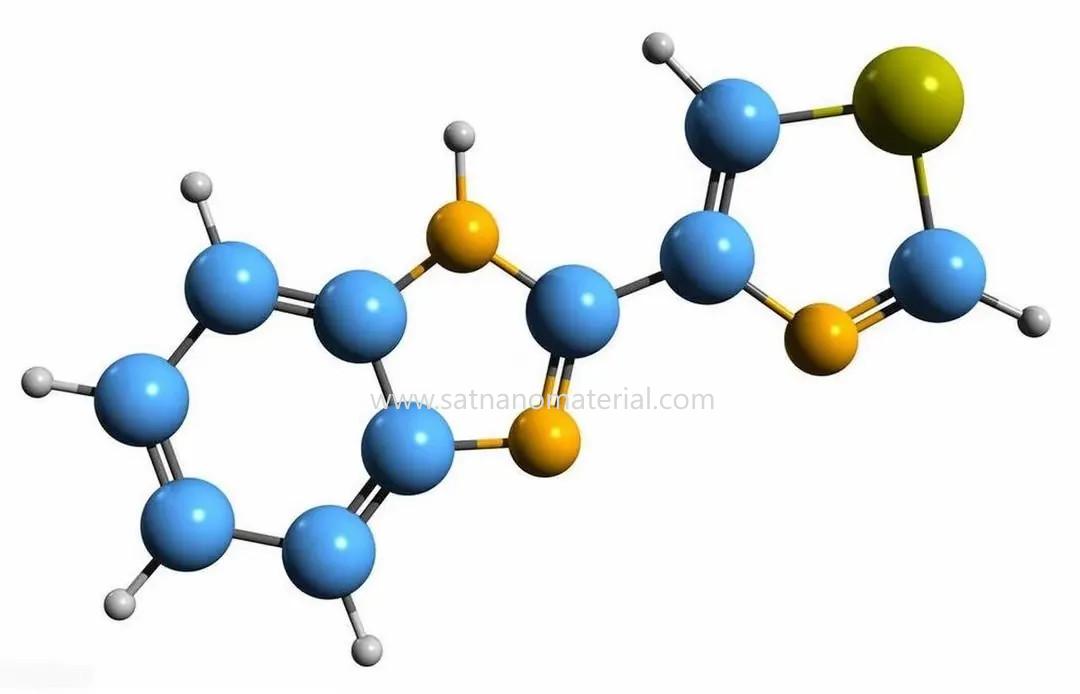
Advanced NiFe2O4 Nanopowder for Industrial & Scientific Applications

1. Structural Paradigm: The Inverse Spinel Advantage

Nickel Ferrite (NiFe2O4) stands as a premier magnetic semiconductor characterized by its inverse spinel crystal structure. In this configuration, Ni2+ ions reside in octahedral [B] sites, while Fe3+Fe3+ ions are split between tetrahedral (A) and octahedral [B] sites. This atomic arrangement facilitates strong superexchange interactions via oxygen bridges, resulting in high ferrimagnetic saturation and exceptional phase stability.


2. Critical Material Parameters

  • Eddy Current Suppression: With a high intrinsic electrical resistivity (ρ≈105−108 Ω⋅cm), NiFe2O4 effectively bypasses the skin effect and eddy current limitations that plague metallic micro-powders at high frequencies (MHz-GHz).
  • Thermal Robustness: Boasting a Curie temperature (TCTC) of ≈585∘C≈585∘C, NiFe2O4 maintains its magnetic integrity under extreme thermal loads where standard soft ferrites would transition to a paramagnetic state.
  • Impedance Tuning: Its moderate complex permeability (μrμr) and permittivity (εrεr) profiles allow for precision-engineered impedance matching (Zin≈Z0), ensuring maximum electromagnetic wave penetration and subsequent attenuation.


3. Mechanisms of EM Attenuation

Within the microwave absorption spectrum (C, X, and Ku bands), NiFe2O4 operates via:

  • Resonance Loss: Utilizing natural resonance and domain wall resonance to dissipate incident radiation.
  • Synergistic Damping: When integrated into polymer matrices, it acts as a magnetic loss regulator, balancing the overall dielectric/magnetic loss tangents to achieve Reflection Loss (RL) values exceeding -40 dB.


4. High-Value Application Verticals

1.Aerospace & Defense: Developing thermally stable Radar Absorbing Materials (RAM) for hypersonic platforms and engine housing.

  • Unique Contribution of NiFe2O4:
    • High Thermal Stability: Its high Curie temperature (TC≈585∘C) ensures that the magnetic loss capability remains "online" even under extreme thermal loads.
    • Chemical Inertness: In high-temperature oxidizing atmospheres, it remains structurally stable and does not oxidize into non-magnetic phases, ensuring long-term mission reliability.
  • Engineering Implementation: It is typically composited with high-temperature ceramic matrices (such as SiC) to create High-Temperature RAM. This is applied to critical areas like engine nozzles, leading edges of wings, and missile radomes.

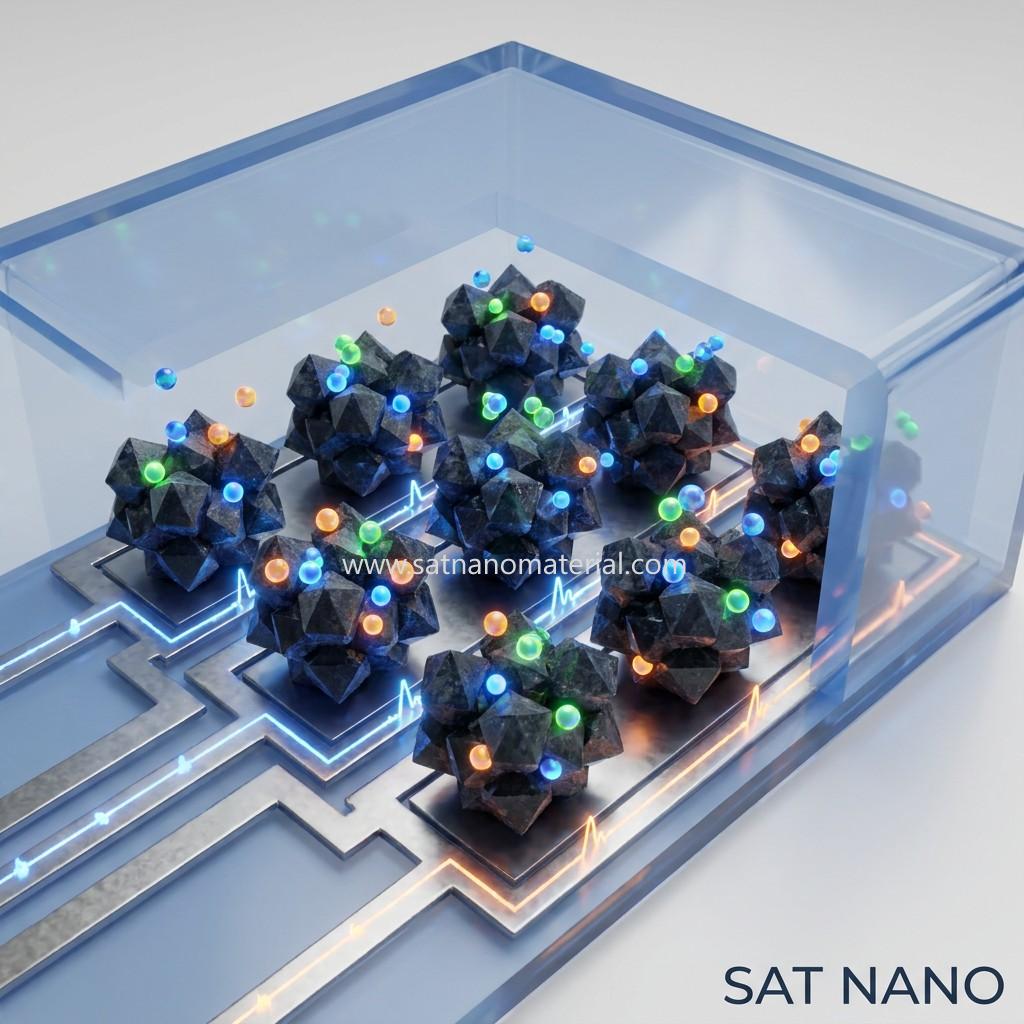
NiFe2O4 nanpowder application

2.Telecommunications: Fabrication of ultra-high-frequency (UHF) circulators, isolators, and low-loss inductors for 5G/6G infrastructure.

  • Unique Contribution of NiFe2O4:
    • Guaranteed High Q-factor: Its exceptionally high electrical resistivity ensures that virtually no eddy current loss is generated in high-frequency alternating fields. This allows inductors to maintain high permeability while achieving a superior Quality Factor (Q).
    • Surpassing Snoek’s Limit: By controlling the nanostructure (e.g., flaky or anisotropic growth), the resonance frequency can be pushed into higher bands, meeting the wideband isolation requirements of 5G mmWave.
  • Engineering Implementation: Using NiFe2O4 powder in LTCC (Low-Temperature Co-fired Ceramic) technology to integrate magnetic components directly into multi-layer circuit boards, achieving highly integrated RF front-end modules.

NiFe2O4 nanpowder application

3.Electrocatalysis: Leveraging the catalytic sites of the spinel lattice for Oxygen Evolution Reaction (OER) and sensing hazardous volatile organic compounds (VOCs).

  • nique Contribution of NiFe2O4:
    • Synergistic Catalytic Effect: The synergistic interaction between NiNi and FeFe sites within the spinel lattice effectively lowers the overpotential of the OER, demonstrating catalytic activity comparable to noble metals.
    • Magnetic Recovery: As a heterogeneous catalyst, it can be easily recovered from the reaction medium using an external magnetic field, preventing catalyst loss and secondary pollution.
  • Engineering Implementation: Depositing nano-NiFe2O4 onto carbon cloth or nickel foam to construct high-performance, low-cost 3D electrocatalytic electrodes for hydrogen plants and high-sensitivity gas sensors (detecting Ethanol, H2SH2S, etc.).

NiFe2O4 nanpowder application

4.Biotechnology: Advanced magnetic fluid hyperthermia (MFH) for targeted oncological therapies.

  • Unique Contribution of NiFe2O4:
    • Efficient Magneto-Thermal Conversion: Under an alternating magnetic field (AMF), nano-NiFe2O4 releases significant heat through hysteresis and relaxation losses, heating the tumor locally to 42∘C42∘C–45∘C—a temperature that induces apoptosis (cell death) in cancer cells.
    • Targeting & Low Toxicity: When modified with specific biological ligands, NiFe2O4 particles act like "guided missiles," accumulating specifically in tumor regions for molecular-level precision thermotherapy.
  • Engineering Implementation: Formulated into Magnetic Nanofluids for intravenous injection or localized puncture, paired with external magnetic hyperthermia equipment for non-invasive treatment.


Nano nickel ferrite is not only a high-performance magnetic filler, but also a system level solution for impedance matching and high-frequency energy loss in complex electromagnetic environments. Nano nickel ferrite provides an irreplaceable technological advantage for scientific research and industrial applications that pursue lightweight, thin, and broadband.


Technical Guide for Formulating Fe₃O₄ Nanopowder into Electrostatic Shielding Coatings

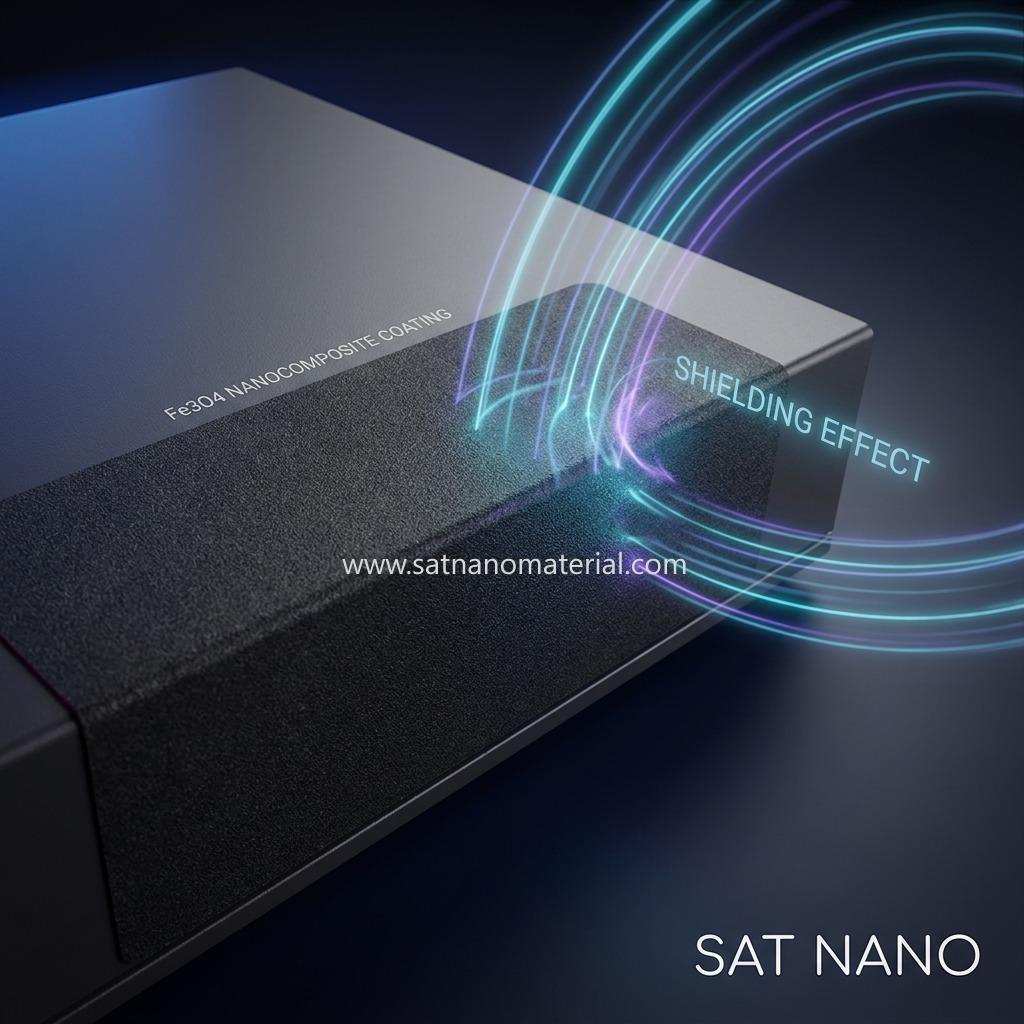
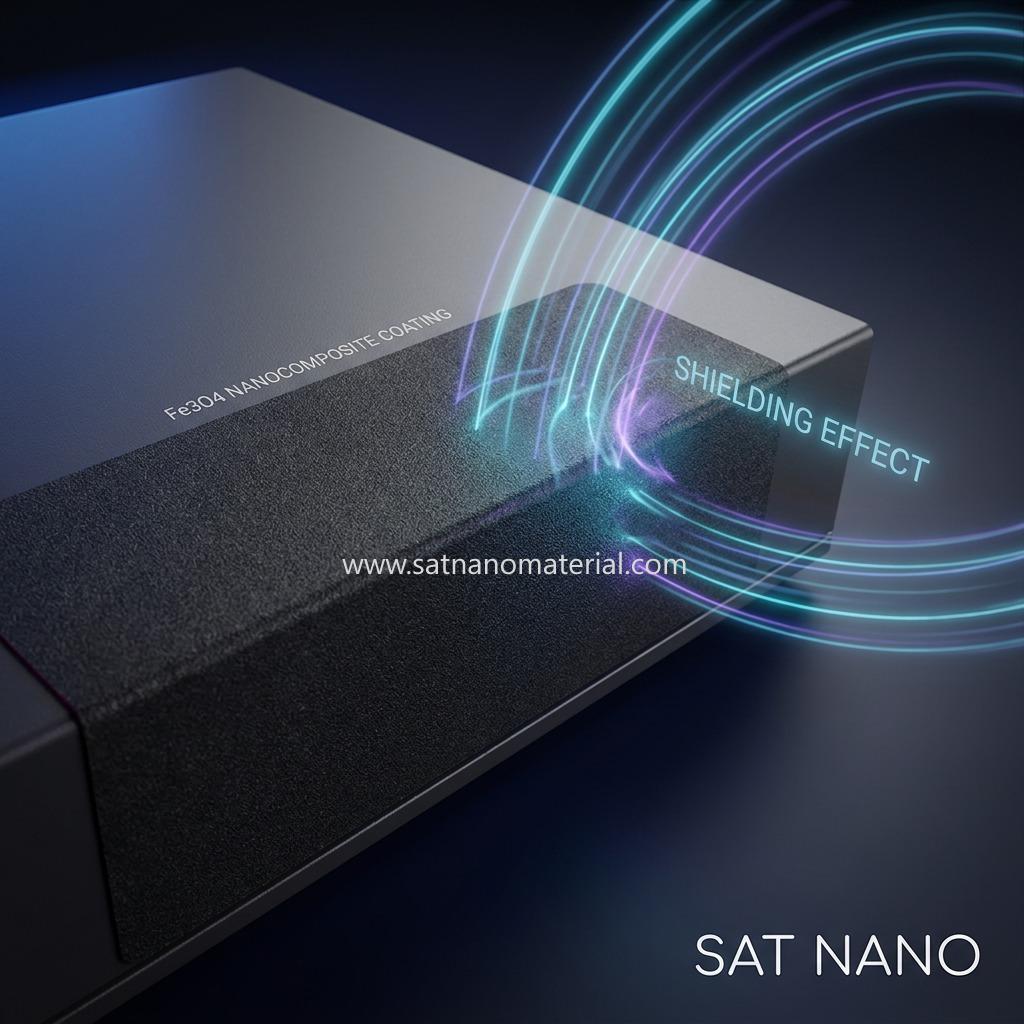
This guide provides a comprehensive technical framework for utilizing magnetite (Fe3O4) nanopowder as a functional filler to formulate industrial protective coatings with superior antistatic and electromagnetic shielding properties. It specifically addresses critical engineering challenges such as nanoparticle agglomeration, sedimentation, percolation threshold optimization, and coating adhesion.

fe3o4 nanopowder coating


1. Fundamental Principles & Formulation Logic

1.1 Dual Conductive and Magnetic Mechanisms

  • Electrostatic Discharge (ESD) / Antistatic: Magnetite (Fe3O4) is a semiconductor with a room-temperature resistivity of approximately 10−2102 to 10−3 Ω⋅cm103 Ωcm. Once uniformly dispersed in a polymer matrix at a sufficient concentration, the nanoparticles contact each other (or utilize the tunneling effect) to establish a continuous conductive network, allowing static charges to bleed off safely.
  • Electromagnetic Interference (EMI) Shielding: Unlike purely carbonaceous or metallic conductive coatings, Fe3O4 is ferrimagnetic. When electromagnetic waves impinge on the coating, it attenuates the magnetic component through hysteresis loss, domain wall resonance, and eddy current losses, absorbing electromagnetic radiation.


1.2 Single-Filler Limitations and Synergistic Networks


Due to the moderate intrinsic resistivity of Fe3O4 compared to pure metals (Ag, Cu, Ni), relying solely on Fe3O4 to achieve a high shielding rating (surface resistivity <104 Ω/sq) requires high loading levels (typically 30%∼50%30%50% by weight). This severe loading dramatically increases coating viscosity, compromises mechanical properties (brittleness), and severely weakens substrate adhesion.

  • Recommended Solution: A "Fe₃O₄ / Carbonaceous Filler" Synergistic Conductive Network. Introducing a minor fraction (0.5%∼1.5%0.5%1.5% by weight) of Multi-Walled Carbon Nanotubes (MWCNTs) or conductive carbon black allows them to act as "conductive bridges" connecting the Fe3O4 nanoparticles. This dramatically lowers the percolation threshold, multiplies electrical conductivity, and reduces the necessary Fe3O4 loading to a manageable 15%∼25%15%25%.


2. Typical Solvent-Borne 2K Epoxy Formulation

Ingredient
Recommended Specification
Weight Parts (pbw)
Function / Mechanism
Film-Forming Binder
Epoxy Resin E-51 (DGEBA)
100
Primary binder; provides excellent corrosion resistance and mechanical adhesion
Reactive Diluent
Butyl Glycidyl Ether (BGE)
10 ~ 15 Reduces initial resin viscosity for easier filler incorporation
Primary Functional Filler
Modified Fe3O4 Nanopowder (20 ~ 50 nm)
25 ~ 35
Conductive and magnetic absorber core
Co-Filler (Optional)
Multi-Walled Carbon Nanotubes (MWCNTs)
0.5 ~ 1.5
Bridges nanoparticles to establish a robust conductive network
Wetting & Dispersing Agent
High-molecular-weight block copolymer (e.g., BYK-110)
1.0 ~ 2.0
Steric stabilization; lowers viscosity and prevents agglomeration
Anti-Settling Agent
Fumed Silica (e.g., Aerosil 200 or modified)
0.8 ~ 1.5
Builds a thixotropic network to prevent heavy iron settling
Leveling & Defoaming Agents
Polyether-modified silicone
0.3 ~ 0.5
Eliminates air bubbles and micro-pinholes, ensuring a smooth finish
Solvent Blend
Xylene : Butanone : Butyl Acetate = 4:3:3
~30 ~ 50
Adjusts viscosity to standard application parameters (20-30s, Ford Cup #4)
Curing Agent (Part B)
Polyamide Curing Agent (e.g., Polyamide 650)
50 ~ 60
Crosslinks with Part A at room or elevated temperature


3. Step-by-Step Preparation Process

Nanoparticles possess extremely high surface energy and naturally form tight secondary agglomerates. Standard low-shear mixing is insufficient to break these structures. The following four-stage protocol must be followed:

Stage 1: Surface Chemical Modification (Wet Silanization)

This stage replaces hydrophilic surface hydroxyls with organophilic chains, preventing re-agglomeration and enhancing compatibility with organic resins.

  1. Prepare Hydrolysis Solution: Mix anhydrous ethanol and deionized water (95:5 wt. ratio). Add Silane Coupling Agent KH-550 (equivalent to 1.5%∼2.0%1.5%2.0% of the weight of Fe3O4). Adjust the pH to 4.0 ~ 5.0 using glacial acetic acid. Stir at room temperature for 30 minutes to ensure full hydrolysis of the silane.
  2. Ultrasonic Dispersion: Disperse the Fe3O4 nanopowder in the silane solution. Subject the suspension to high-intensity ultrasonic treatment for 30 ~ 45 minutes to disrupt loose physical clusters.
  3. Reflux Reaction: Transfer the suspension to a three-necked flask equipped with a mechanical stirrer and a reflux condenser. Heat to 75 ~ 80 °C under vigorous stirring for 3 hours.
  4. Washing & Collection: Cool the mixture. Position a strong neodymium-iron-boron (NdFeB) magnet under the flask to magnetically separate the Fe3O4 nanoparticles. Decant the supernatant, replenish with anhydrous ethanol, and repeat the washing cycle 3 times to remove any unreacted silane.
  5. Drying & Pulverization: Dry the wet paste in a vacuum oven at 70 °C for 12 hours. Gently mill the dried cake back into a fine, organophilic Fe3O4 powder.


Stage 2: Pre-Mixing


  1. Charge the epoxy resin, reactive diluent, solvents, and the wetting/dispersing agent (BYK-110) into a mixing vessel.
  2. Set the high-speed dissolver to 500 rpm. Gradually charge the modified Fe3O4 nanopowder and the carbon co-fillers.
  3. Increase the shear speed to 1500 ~ 2000 rpm and disperse for 30 ~ 45 minutes to wet the fillers thoroughly.


Stage 3: High-Energy Bead Milling (Critical Step)


  1. Bead Milling: Pump the pre-mixed slurry into a horizontal bead mill charged with 0.2 ~ 0.4 mm yttria-stabilized zirconia beads (70~80% filling ratio).
  2. Temperature Control: Run the slurry through 3 ~ 4 passes. Keep the mill's cooling jacket active, maintaining the product temperature below 50 °C to prevent premature resin polymerization.
  3. Fineness Verification: Check the fineness using a hegman gauge. Stop milling once the reading is ≤10 μm10 μm and the paste possesses a glossy, buttery texture.


Stage 4: Post-Addition & Stabilization


  1. Blend in the leveling agent, defoamer, and the pre-dispersed fumed silica paste at 800 rpm.
  2. Filter the coating base through a 200-mesh (75 μmμm) screen to eliminate any stray particles. Package and seal as Part A (Base).


4. Coating Application Guide


4.1 Substrate Treatment

Adhesion dictates the longevity and reliability of the shielding layer.

  • Metal substrates (Steel, Aluminum enclosures): Solvent degrease, then grit-blast (Sa 2.5) or abrade to profile the surface.
  • Plastic substrates (ABS, PC): Clean with isopropyl alcohol to remove mold release agents. Consider plasma treatment or a light plastic primer to promote chemical bonding.

4.2 Mixing and Induction

  • Blend Part A (Base) and Part B (Curing Agent 650) at a 100 : 50 weight ratio (or as specified by the curing agent's amine value).
  • Adjust viscosity by adding the solvent blend under mechanical agitation.
  • Induction (Aging) Time: Let the mixture stand for 15 ~ 20 minutes before spraying. This initiates pre-polymerization and helps expel microbubbles.
  • Pot Life: Use the catalyzed paint within 4 hours; discard if gelation begins.

4.3 Spraying Process

  • Pneumatic Air Spraying is highly recommended to achieve a uniform, isotropic network. Use a nozzle size of 1.2 ~ 1.5 mm and air pressure of 0.3 ~ 0.5 MPa.
  • Apply in multiple wet-on-wet passes (15∼20 μm1520 μm per pass) with a 10-minute flash-off time between passes. Aim for a total dry film thickness (DFT) of 35 ~ 50 μmμm.


4.4 Curing Conditions

  • Ambient Cure: Dry-to-touch in 2 hours, hard-dry in 24 hours (full chemical cure in 7 days at 25 °C).
  • Forced Cure (Recommended): Allow a 30-minute flash-off, then bake in an oven at 80 °C for 2 hours. Thermal curing induces matrix shrinkage, compressing the conductive fillers closer together to yield a superior conductive/shielding performance.


5. Performance Evaluation & Technical Metrics


  1. Surface Resistivity:
    Measure via a 4-point probe or high-resistance meter.
    • Antistatic Threshold: Surface resistivity should fall between 105∼109 Ω/sq105109 Ω/sq.
    • Electrostatic/EMI Shielding Grade: Surface resistivity <104 Ω/sq<104 Ω/sq (achievable with the Fe3O4Fe3O4/MWCNT co-filler formulation).
  2. Cross-Cut Adhesion:
    Per GB/T 9286 or ASTM D3359, the coating must achieve a rating of Class 0 or 1 (no peeling).
  3. EMI Shielding Effectiveness (SE):
    Evaluate in the 30 MHz ~ 1.5 GHz band using a coaxial flange test fixture (ASTM D4935) to measure attenuation in decibels (dB).


6. Engineering Pitfalls & Best Practices


  1. The Settling Catastrophe:
    The density of Fe3O4 (5.18 g/cm35.18 g/cm3) is far higher than that of epoxy resin (approx. 1.2 g/cm31.2 g/cm3). Unstabilized nanoparticles settle into an extremely hard sediment that cannot be re-dispersed.
    • Mitigation: Never omit the fumed silica or polyamide wax (thixotropic agent). This creates a strong yield stress under static conditions to lock the nanoparticles in place, while thinning immediately under shear.
  2. Thermal Oxidation Risk:
    Nanoparticles have extremely high chemical activity. If the temperature spikes during milling or drying, magnetite can oxidize into hematite (α-Fe2O3α-Fe2O3), which is non-magnetic and poorly conductive (destroying the shielding properties). Always maintain the water-cooling jacket during milling.
  3. Stoichiometric Precision:
    Always weigh the curing agent precisely. Epoxies do not dry by evaporation; they cure via stoichiometry. An incorrect ratio leads to sticky film or brittle, highly stressed coatings that crack and break the shielding pathways.


Technical Solution Nickel Ferrite NiFe2O4 for Advanced EM Absorption & Shielding

Technical Solution: Nickel Ferrite (NiFe2O4) for Advanced EM Absorption & Shielding


1. Material Identification

Nickel Ferrite (NiFe2O4) is a high-performance soft magnetic ferrite with an inverse spinel structure. In this configuration, Ni2+Ni2+ ions and half of the Fe3+Fe3+ ions occupy octahedral sites, while the remaining Fe3+Fe3+ ions occupy tetrahedral sites.

  • Physical Form: Ultra-fine black or dark gray nanopowder.
  • Key Characteristics:
    • High Curie Temperature (≈585∘C≈585∘C): Maintains magnetic stability in high-temperature environments.
    • High Electrical Resistivity: Unlike metallic powders, it minimizes eddy current losses at high frequencies.
    • Chemical Stability: Highly resistant to oxidation, corrosion, and environmental degradation.

Nife2O4


2. Functional Roles & Mechanisms

In the design of Electromagnetic (EM) functional materials, Nickel Ferrite serves two critical roles:


2.1 Magnetic Loss Mechanism

It attenuates EM energy primarily through magnetic hysteresis loss, domain wall resonance, and natural resonance. It is particularly effective in the 1 MHz to 18 GHz range, converting magnetic field energy into heat.


2.2 Impedance Matching Optimizer

A major challenge with high-conductivity fillers (like Carbon Nanotubes) is that they reflect waves at the surface. Nickel Ferrite has a relatively high magnetic permeability (μμ) and a moderate dielectric constant (εε). This balance helps the material achieve impedance matching (Zin≈Z0Zin≈Z0), allowing EM waves to enter the coating rather than reflecting off the surface.


2.3 High-Frequency Performance

Due to its high resistivity, NiFe2O4NiFe2O4 can operate at much higher frequencies than traditional iron powders without suffering from the "Snoek's Limit" bottleneck as severely.

Absorption AND Shielding


3. Technical Parameters (Typical 2-18 GHz Range)

The following values represent typical performance metrics for NiFe2O4NiFe2O4 dispersed in a polymer matrix (at 30-40% loading):


Parameter
Symbol
Typical Value Range
Real Permittivity
ε′
4.0 ~ 9.0
Imaginary Permittivity
ε′′
0.01 ~ 1.0 (Low dielectric loss)
Real Permeability
μ′
1.1 ~ 2.0
Imaginary Permeability
μ′′
0.1 ~ 0.8 (Moderate magnetic loss)
Magnetic Loss Tangent
tanδμ

0.1 ~ 0.5
Reflection Loss (RL)
RLmin

−20 dB to −45 dB−45 dB (99% to 99.99% absorption)
Effective Bandwidth
EAB
4.0 ~ 6.5 GHz (where RL < -10 dB)
Shielding Effectiveness
SE
5 ~ 15 dB (Pure); 30 ~ 70 dB (Composite)


4. Integrated Application Solution

To overcome the density of pure ferrite and its relatively low dielectric loss, we recommend a "Magneto-Dielectric Synergistic System."


4.1 Recommended Formulation Concept

  • Binder: Epoxy, Polyurethane, or Silicone rubber.
  • Primary Filler: NiFe2O4NiFe2O4 Nanopowder (25% - 40% wt).
  • Secondary Filler: Multi-Walled Carbon Nanotubes (MWCNTs) or Graphene (1% - 3% wt) to provide the necessary electrical conductivity for dielectric loss.
  • Coupling Agent: Silane (e.g., KH-550) to improve dispersion and interface bonding.


4.2 Preparation Workflow

  1. Surface Modification: Treat NiFe2O4NiFe2O4 with a silane coupling agent to enhance organophilic properties.
  2. High-Energy Dispersing: Use ball milling or bead milling to create a homogeneous mixture of the ferrite and carbon co-fillers in the resin.
  3. Application: Spray or cast to a calculated matching thickness (typically 1.5∼2.5 mm for X-band or Ku-band targets).


5. Strategic Conclusion

Nickel Ferrite (NiFe2O4) is a "versatile" filler for modern EM protection.

  • For High-Absorption: Use it as an impedance-matching "window" to let waves into the coating.
  • For EMI Shielding: Use it in composites to block the magnetic component of radiation, which carbon-only shields often fail to do.
  • For Extreme Conditions: Choose NiFe2O4 when the application requires high-temperature stability (up to 300°C+) where other magnetic materials might fail.


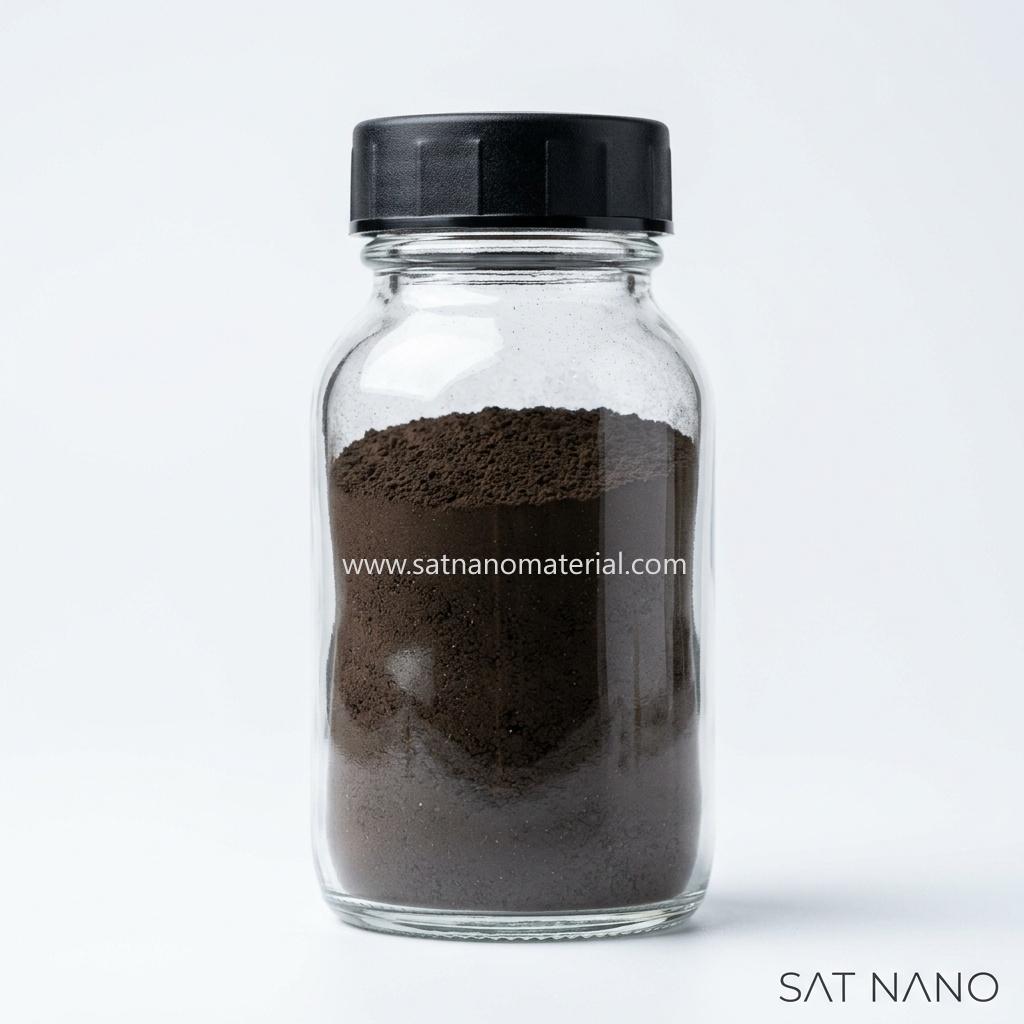
The variation in color of Fe3O4 nanopowder from black to reddish brown

1. Intrinsic Color: Black

Bulk (micron-scale) pure Fe3O4(Magnetite) appears deep black under visible light.

  • Reason: Fe3O4 is a narrow-bandgap semiconductor (bandgap ≈0.1≈0.1 eV), which absorbs light across the entire visible spectrum with virtually no reflection, resulting in a pure black appearance.
  • Industrial products: Larger-particle Fe3O4powders (micron-scale or highly crystalline nanoparticles), if kept free of surface oxidation, retain the standard black color.


2. The Nanoscale Color Shift: Reddish-Brown / Russet

When Fe3O4 particle size is reduced to the nanoscale (typically < 30 nm), the color often shifts from pure black toward reddish-brown or russet. This is driven by two synergistic factors:


A. Surface Oxidation (Primary Cause)

Nanoparticles possess an extremely high specific surface area, with surface atoms accounting for a vastly greater proportion than in micron-scale particles. Fe3O4 nanoparticles readily undergo surface oxidation when exposed to air, water, or during synthesis:

4 Fe3O4+O2⟶6 γ-Fe2O34 +O2⟶6 γ-Fe2O3

  • Result: A "Core-Shell" Structure forms:
    • Core: Retains black Fe3O4(magnetite).
    • Shell: Oxidized into brown-colored γ-Fe2O3 (maghemite).
  • When the particle size is extremely small (e.g., 10-15 nm), the shell-to-core volume ratio becomes significant, and the overall color shifts from black toward reddish-brown.
  • The smaller the particle, the larger the specific surface area, the higher the degree of oxidation, and the more pronounced the red/brown hue.


B. Quantum Size Effects & Light Scattering

  • Absorption Band Blue-Shift: Due to quantum confinement effects, the absorption spectrum of nano-Fe3O4Fe3O4 undergoes a blue-shift relative to the bulk material. The originally full visible-light absorption is weakened, allowing selective scattering or reflection of shorter wavelengths.
  • Rayleigh Scattering: When particle dimensions are far smaller than visible wavelengths (380-780 nm), Rayleigh scattering dominates. Scattering intensity is inversely proportional to the sixth power of particle size, meaning shorter wavelengths (blue-violet) are scattered more strongly, shifting the reflected light toward warm tones (red/brown).


3. Color vs. Particle Size / Purity Summary

Appearance

Corresponding State
Probable Cause
Pure Black
Large particles (> 100 nm) or strict oxygen-free protection
Intact lattice, no surface oxidation, full-spectrum absorption
Dark Brown-Black
Medium particles (30-50 nm), minor air exposure
Surface oxidation begins; thin γ-Fe2O3 shell forms
Reddish-Brown
Ultra-fine particles (< 20 nm), stored in air
Significant oxidation; shell thickness comparable to core; color dominated by γ-Fe2O3

Bright Red
Fully oxidized or high-temperature calcined
Completely converted to α-Fe2O3 (Hematite); no longer Fe3O4


4. Practical Engineering Recommendations

  • If your application requires pure black Fe3O4 (e.g., black pigments, magnetic displays):
    • Source products with a particle size of 50-100 nm or larger.
    • Store under vacuum or inert gas to prevent prolonged air exposure.
    • During synthesis, conduct hydrothermal reactions under an argon or nitrogen atmosphere.
  • If the reddish-brown color is acceptable (e.g., microwave absorbers, catalytic applications):
    • A thin oxidation layer has a limited impact on magnetic properties and conductivity — the powder remains fully functional.
    • The reddish-brown appearance actually confirms that the particle size has been successfully controlled at the nanoscale


Application of gold nano powder in medical treatment

Gold nanoparticles refer to ultrafine gold particles with a particle size between 1 and 100 nanometers. Unlike macroscopic gold, nanoscale gold exhibits significant surface plasmon resonance (SPR) effects, quantum size effects, and a huge specific surface area. These characteristics endow it with excellent optical, electrical, and catalytic properties in complex biological environments. In addition, gold nanoparticles have become an important bridge between nanotechnology and clinical medicine due to their stable chemical properties and low biological toxicity.


1. Application in medical diagnosis

1.1 Biosensing and Rapid Detection
One of the most widely used applications of gold nanoparticles is as markers for in vitro diagnostics (IVD). The most typical case is side stream immunoassay (such as early pregnancy test paper and COVID-19 rapid detection test paper), which uses the strong absorbance and color change of gold nano powder to realize the signal detection visible to the naked eye.

1.2 Imaging contrast enhancement
The high atomic number of gold gives it excellent X-ray attenuation ability. Compared to traditional iodine contrast agents, gold nanoparticles as CT contrast agents have longer blood circulation time and lower renal toxicity. At the same time, its photothermal properties also make it play a key role in photoacoustic imaging (PAI), significantly improving the imaging contrast of tumor tissue.

2. Innovative applications in the field of treatment

2.1 Photothermal Therapy (PTT)
Gold nanoparticles can efficiently convert light energy into heat energy under near-infrared light irradiation. By surface functionalization modification (such as linking folate or antibodies), these nanoparticles can accurately aggregate at the tumor site. After laser irradiation, the locally generated high temperature is sufficient to kill cancer cells, while causing minimal damage to surrounding healthy tissues.
gold nanopowder
2.2 Radiation therapy sensitization
Since gold nanoparticles can absorb high-energy rays and release secondary electrons (photoelectrons and Auger electrons), the use of gold nanoparticles during radiotherapy can significantly increase the local radiation dose, thus improving the killing rate of tumor cells and reducing the exposure risk to normal tissues.

2.3 Targeted drug delivery
The huge specific surface area of gold nano powder allows it to load a large number of chemotherapy drugs, proteins or nucleic acids (DNA/RNA). By utilizing its surface thiol chemistry (Au-S bonds), scientists can easily graft ligands onto the surface of nanoparticles, achieving precise drug delivery and controlled release, thereby reducing systemic toxic side effects.
gold nanopowder
The different particle sizes of gold nanoparticles will have different applications. The following is the parameter data compiled by Gary, a technician from SAT NANO company.


3. Diameter/Size: This is the core parameter that affects the performance of gold nanoparticles.

3.1 Less than 20 nm: mainly used for drug delivery and renal clearance. For example, the diameter of particles used for drug delivery is often around 13-18 nm, while particles used for liver targeting can be controlled between 10-30 nm. Ultra small gold nanoclusters (such as Au ₂₅) are composed of precise 25 gold atoms and typically have a diameter less than 3 nm.

3.2 20-50 nm: Widely used in optical imaging and photothermal therapy, such as 3.19 nm particles for imaging and 25 × 47 nm gold nanorods used in photothermal therapy.

3.3 50-200 nm: Commonly used in scenarios that require high photothermal conversion efficiency, such as multi-layer gold nanostructures (<100 nm) used for tumor photothermal therapy and nanogold probes used for immunohistochemical detection. Studies have shown that larger spherical particles (approximately 102 nm) are actually more easily taken up by certain cells.
gold nanopowder
4. Optical properties: This is the basis for gold nanoparticles to be used for imaging and therapy.

4.1 Characteristic absorption peak (λ max): Spherical gold nanoparticles usually have an absorption peak around 520-530 nm, while gold nanorods have two plasmon resonance absorption peaks, horizontal and vertical. The vertical peak can be moved to the near-infrared region (usually 600-900 nm) by adjusting the aspect ratio of the rod. The light energy in this band penetrates deeper tissues, making it very suitable for photothermal therapy and deep tissue imaging.

4.2 Luminescence Characteristics: When used for biological imaging, high quantum yield (such as 12.9%) means brighter signals, while ultra long luminescence lifetime (about 1 microsecond) can be effectively shielded from background fluorescence of biological tissues through time gating technology, resulting in higher resolution images.

4.3 Surface Modification: In order to increase stability, biocompatibility, and targeting, the surface of gold nanoparticles usually needs to be "disguised".

4.4 PEG modification: Polyethylene glycol (PEG) is the most commonly used modifying molecule, which acts as a "invisibility cloak" for particles, reducing their clearance by the immune system and prolonging circulation time in the body. For example, PEG3000 modified 40 nm gold particles.

4.5 Targeted molecular modification: By connecting specific ligands, nanoparticles can accurately find their targets. For example, modifying GalNAc (N-acetylglucosamine) can achieve liver targeting; Connecting antibodies can be used for targeted imaging and treatment of tumors.


Overall, the choice of parameters for gold nanoparticles depends entirely on your specific application goals:

If the goal is high-resolution biological imaging, especially deep tissue imaging, the focus can be on particles with a size of a few nanometers, high quantum yield, and near-infrared luminescence characteristics.

If the target is photothermal therapy for tumors, it is necessary to choose particles with strong absorption in the near-infrared region (such as 808 nm) and high photothermal conversion efficiency (such as 77%), and their optimal size is usually below 100 nm.

If the goal is to build a targeted drug delivery system, particles with a particle size of 10-30 nm and a surface that is easy to modify with multiple functions (such as linking PEG and targeting ligands) are a more suitable choice.


SAT NANO is a best supplier of gold nanopowder in China, we can offer nano particle 20-30nm, if you need gold dispersion, we also can supply, if you have any enquiry, please feel free to contact us at admin@satnano.com
CNTs dispersion technology from basic principles to applications

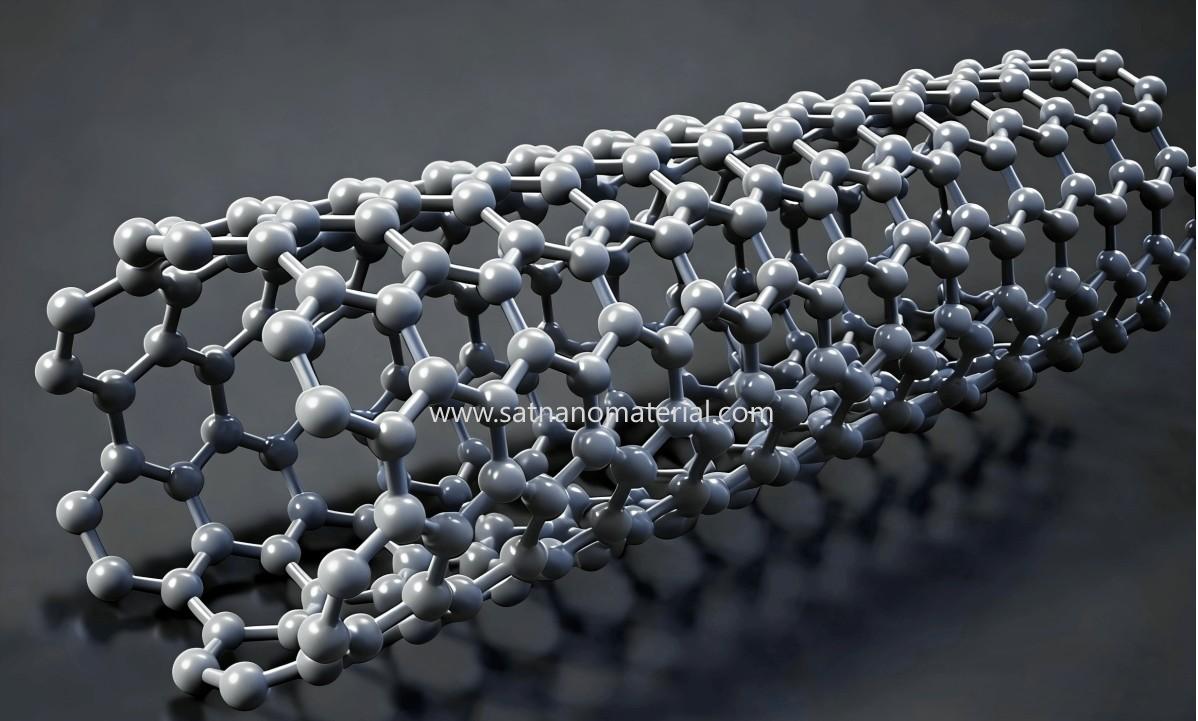
Carbon nanotubes (CNTs), as typical one-dimensional nanomaterials, have shown great potential for applications in various fields such as energy storage, composite materials, biomedical, electronic devices, etc. due to their excellent mechanical properties (100 times higher than steel), outstanding conductivity, excellent thermal properties, and unique optical properties. However, the strong van der Waals forces (~500 eV/µ m) and high aspect ratios (>1000) between CNTs make them prone to forming strong aggregates, severely limiting their excellent performance and practical applications. Therefore, achieving uniform and stable dispersion of CNTs in solvents or polymer matrices is a key prerequisite for unlocking their nanoscale properties and promoting their large-scale applications. The aggregation of CNTs is mainly due to their large specific surface area, strong van der Waals forces between tube walls, and π - π stacking interactions between delocalized π electron clouds formed by sp2 hybridized carbon atoms. This agglomeration not only reduces the specific surface area, but also hinders the formation of continuous conductive or reinforcing networks in the matrix. So far, two main methods have been developed for the dispersion of CNTs, namely covalent functionalization and non covalent functionalization. Covalent functionalization can significantly improve the dispersibility of CNTs by grafting soluble functional groups or hydrophilic chains onto them; Non covalent functionalization is achieved by adsorbing onto the sidewalls of CNTs through non covalent interactions (including van der Waals forces, hydrogen bonds, hydrophobic interactions, and electrostatic attraction, etc.) using added dispersants.

carbon nanotube powder


Covalent modification of dispersed carbon nanotubes

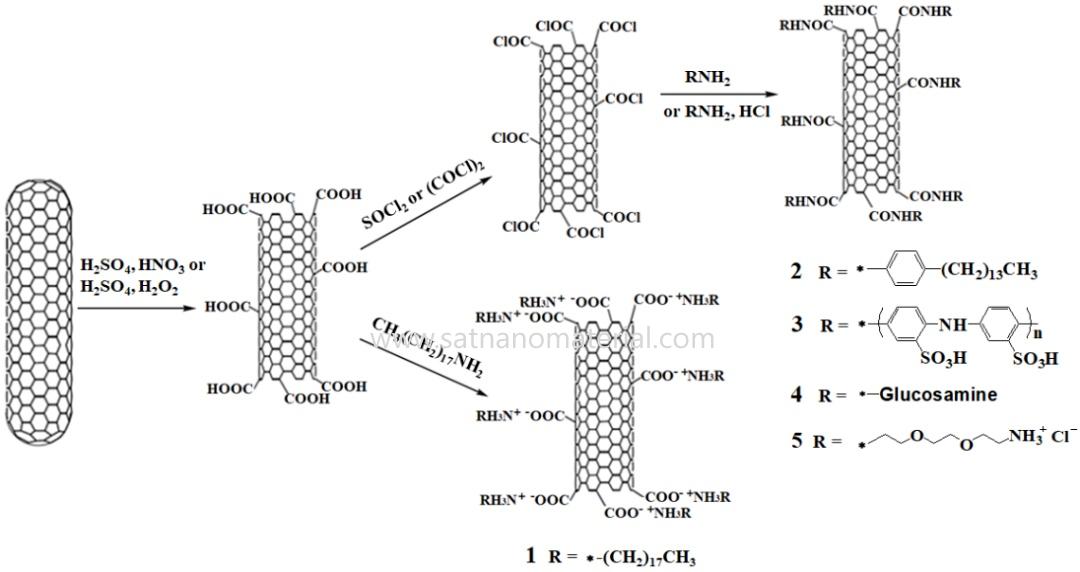
Currently, two methods have been developed for the indirect and direct chemical functionalization of CNTs sidewalls. The indirect method is usually to generate active sites on the surface of CNTs through chemical reactions. One of the most typical examples is to use strong acids to oxidize CNTs to generate oxygen-containing functional groups on their surface, such as - COOH, - CHO, and - OH. To further enhance the dispersibility of CNTs, further amination or acylation reactions can be performed to modify the sidewalls of CNTs. As shown in Figure 1, oxidized CNTs are directly coupled with octadecylamine (CH3 (CH2) 17NH2) through acid-base reactions to form zwitterions, or react with thionyl chloride (SOCl2) or oxalyl chloride ((COCl) 2) to form acyl chloride intermediates, which are then acylated with 4-tetradecylaniline (CH3 (CH2) 13C6H4NH2). After the reaction, the long alkyl chains attached to the surface of CNTs act as solubilizers, endowing them with good dispersibility in most organic solvents.

By grafting different types of long-chain alkyl groups, the dispersibility of CNTs in various solvents can be effectively regulated to meet different functional requirements. For example, grafting with water-soluble polymer poly (aminobenzenesulfonic acid) (PABS) can effectively improve the dispersibility of single-walled carbon nanotubes (SWCNTs) in aqueous solution, and the resulting SWCNT-PABS exhibits much higher conductivity than pure PABS. Functionalized CNTs with good dispersibility (0.1-0.3 mg/mL) were obtained by grafting glucosamine (C6H13NO5) onto activated CNTs with acyl chloride. By treating multi walled carbon nanotubes (MWCNTs) with strong acid (H2SO2/HNO2) and then grafting amino triethylene glycol chains to introduce positive charges, well dispersed functionalized MWCNTs can be obtained.

carbon nanotube powder

Figure 1 Covalent functionalization of CNTs through amidation reaction


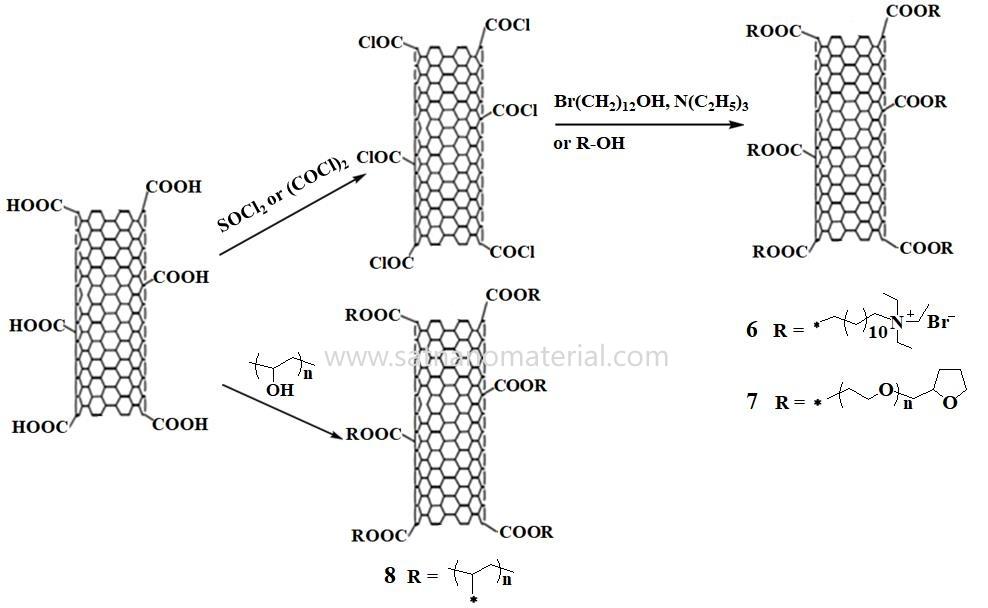
Esterification reaction is another effective method for covalent functionalization of CNTs (Figure 2). The SWCNTs functionalized with dodecyl quaternary ammonium bromide synthesized through esterification reaction (6 in Figure 2) exhibit good water dispersibility in the pH range of 6.87-11.25 and are used as fillers in polyvinyl alcohol (PVA) based composites. In addition, polymer segments such as polyethylene glycol (7 in Figure 2), PVA (8 in Figure 2), DNA, and proteins are covalently attached to the surface of CNTs through esterification or amidation reactions to pursue dispersibility in aqueous solutions.

carbon nanotube powder

Figure 2: Covalent functionalization of CNTs through lipidation reaction.


The condensation reaction between hydroxyl and silmethoxy groups has also been used for the chemical functionalization of CNTs. The reaction between hydroxylated CNTs and conductive carbon black grafted with poly (3-trimethoxysilylpropyl methacrylate) (CCB-PMPS) resulted in CNTs based hybrid fillers with good dispersibility in tetrahydrofuran (THF).
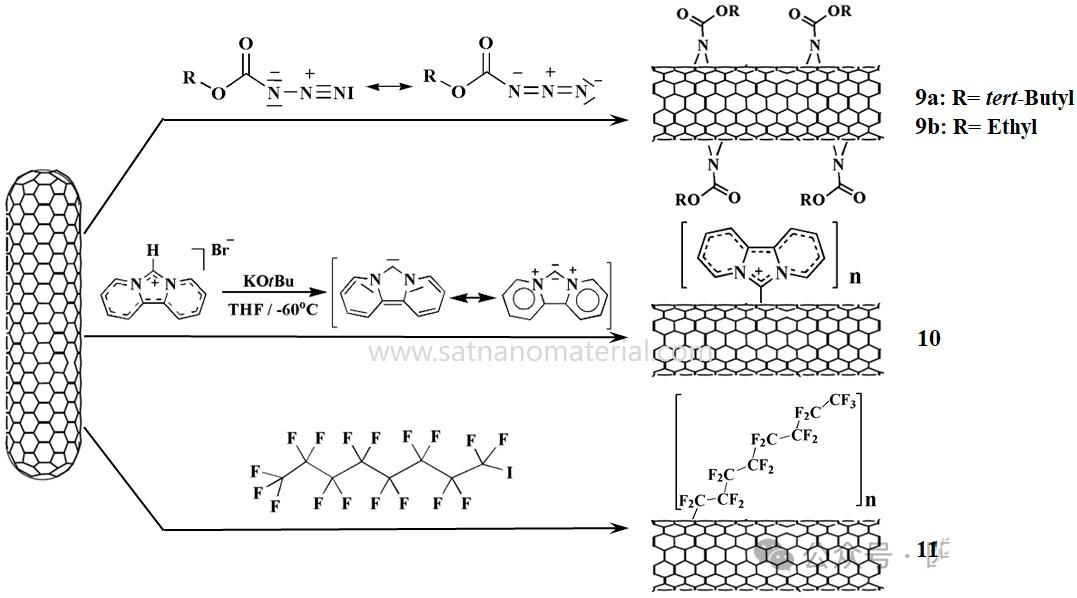
In addition to the indirect modification methods mentioned above, the direct functionalization of CNTs sidewalls has also been widely studied. CNTs can react with nitrogen alkenes, carbenes, imine ylides, or free radicals (or cycloaddition). Compared with indirect functionalization, direct functionalization can avoid the damage of strong acids or oxidation processes to CNTs, and prevent the shortening of CNT length. The following figure shows a schematic diagram of the direct functionalization of SWCNTs sidewalls. SWCNTs undergo addition reactions with nitrogen alkenes, nucleophilic carbenes, and perfluoroalkyl groups, respectively. It was found that the derived SWCNTs obtained by reacting with alkyl azide ester and bipyridine imidazolidine exhibited good dispersibility in dimethyl sulfoxide (DMSO). SWCNTs react with nitrogen-containing compounds with more complex substituents such as aryl, dendritic macromolecules, long alkyl chains, and oligopolyethylene glycol units, and exhibit good dispersibility in various organic solvents including 1,1,2,2-tetrachloroethane (TCE), DMSO, and 1,2-dichlorobenzene (1,2-DCB).
carbon nanotube powder

Figure 3 functionalizes the sidewalls of CNTs through the addition of nitrogen alkenes, nucleophilic carbenes, and free radicals.


The 1,3-dipolar cycloaddition of nitrogen-containing methyl alkali ylides generated by thermal condensation of alpha amino acids and aldehydes has been proven to be an effective method for functionalizing CNTs. Phenol groups can be grafted onto the surface of SWCNTs through 1,3-dipolar cycloaddition, achieving stable dispersion in polar solvents. By using aldehydes and modified glycine for grafting, products that can be dispersed in solvents such as CHCl3, CH2Cl2, acetone, methanol, ethanol, and water can be obtained. In addition, CNTs were functionalized with amine functionalized and water dispersible derivatives by reacting 1,3-dipolar cycloaddition with N-functionalized glycine with amino end groups protected by tert butoxycarbonyl (Boc) (Figure 4: CNT functionalization based on 1,3-dipolar cycloaddition reaction on CNT sidewalls). ). This process was subsequently used to prepare CNTs modified with amino acids and peptides for application in the biomedical field


The technical sharing of covalent modification and dispersion of carbon nanotubes above is completed by DANA, a technician at SAT NANO, through the dispersion of SAT NANO's carbon nanotube powder. I hope the above technical sharing will be helpful for customers to disperse covalently modified dispersed carbon nanotubes. Our technician DANA will introduce the dispersion technology of non covalent modified dispersed carbon nanotubes in the next article.


SAT NANO is a best supplier of carbon nanotube powder in China, if you have any enquiry, please feel free to contact us at admin@satnano.com

Cobalt Blue powder is a deep blue inorganic pigment with excellent properties

Cobalt Blue powder

is a deep blue inorganic pigment with excellent properties, which has a wide range of applications in industry, art, and scientific research. Here is a detailed introduction about it:

cobalt blue powder

1. Chemical composition

Chemical name: Cobalt Aluminate.
Chemical formula: CoAl2O4

Crystal structure: It has a stable spinel structure, which allows it to maintain extremely high stability under extreme physical and chemical conditions.

2. Core Features

Excellent heat resistance: It is one of the most heat-resistant pigments known, capable of withstanding high temperatures of up to 1200 ° C without color change or decomposition. Therefore, it is the preferred coloring agent for the ceramic and glass industries.
Excellent weather resistance: It has strong resistance to ultraviolet rays, acids, alkalis, solvents, and atmospheric corrosion, and will not fade or become brittle due to long-term sun exposure.
Environmentally friendly: Unlike some pigments containing cadmium or lead, cobalt blue has very stable properties after curing and is considered a relatively environmentally friendly inorganic pigment.
Excellent covering and coloring power: Its color tone is deep, pure, and has a unique luster.

3. Synthesis process: How is it manufactured?

The performance of cobalt blue powder greatly depends on its synthesis method, especially for nanoscale products like SAT NANO:

Traditional Solid state method: Cobalt oxide and aluminum oxide are calcined for a long time at 1100 ° C-1300 ° C. The powder crystals produced by this method are intact, but the particle size is relatively large (usually in the micrometer range) and the transparency is low.
Sol gel method: the precursor solution is mixed at the molecular level and formed at a lower temperature (600 ° C -800 ° C). This process can produce cobalt blue at the nanometer level (<100nm), with extremely high specific surface area and transparency, commonly used in high-end automotive paints and inkjet inks.
Hydrothermal synthesis method: generated in a closed high-pressure reactor. This method can precisely control the morphology of the powder (such as spherical or rod-shaped), giving it special activity in certain catalytic applications.

Regarding nanoscale cobalt blue (powder), the following sets of core experimental data are usually focused on in industrial research and academic studies. These data not only demonstrate its material properties, but also directly guide its application in coatings and ceramics.

The following is a summary of experimental data based on SAT NANO nanoscale cobalt blue products:


1. Basic Physicochemical Properties

These parameters define the quality and dispersibility of the nanopowder.


Parameter
Typical Value (Nano-grade)
Test Method
Average Particle Size (D50)
30 - 50 nm
DLS / TEM
BET Specific Surface Area
45 - 65 m2/gm2/g
N2 Adsorption
Crystal Structure
Spinel Phase
XRD (X-Ray Diffraction
Density
4.3 - 4.5 g/cm3g/cm3
Pycnometer
pH Value
6.5 - 7.5
10% Aqueous Suspension
Oil Absorption
20 - 30 g/100g
ASTM D281

2. Thermal Stability Data (For Ceramics)

This test simulates the high-temperature firing process in ceramic glazes.

  • TGA (Thermogravimetric Analysis): Mass loss is < 0.5% up to 1000°C, indicating extreme structural stability and no volatile components.
  • Color Stability (ΔEΔE Color Difference):
    • At 800°C vs. 25°C: ΔE<0.8ΔE<0.8
    • At 1200°C vs. 25°C: ΔE<1.5ΔE<1.5
  • Conclusion: The color remains consistent and vibrant even at extreme temperatures, making it the industry standard for "underglaze blue" and high-fire ceramics.


3. Weathering and Lightfastness (For Coatings)

This evaluates the coating's resistance to long-term outdoor exposure.

  • QUV Accelerated Weathering Test:
    • Condition: 1000 hours of UV-B irradiation (simulating 5-10 years of outdoor exposure).
    • Gloss Retention: > 95%
    • Color Change (ΔEΔE): 0.2 - 0.5 (In comparison, organic blue pigments typically show a ΔEΔE of 3.0 or higher).
  • Chemical Resistance:
    • 5% HCl immersion (48h): Grade 5 (No change)
    • 5% NaOH immersion (48h): Grade 5 (No change)
  • Conclusion: Cobalt Blue is virtually impervious to acid rain, alkaline detergents, and intense UV radiation.

cobalt blue powder

4. Optical and Colorimetric Performance

Comparing Nano Cobalt Blue with traditional micron-sized powders.

  • Reflectance Spectrum: Exhibits a strong reflectance peak at 450nm - 480nm (Blue region) with reflectance > 85%.
  • Tinting Strength: Nano-grade powder provides 30% - 50% higher tinting strength than micron-sized alternatives. This allows for lower pigment loading while achieving the same color intensity.
  • Haze & Transparency: In a 1% loading clear coat, nano cobalt blue maintains high transparency and low haze, ideal for "Deep-Sea Blue" metallic car paints.

SAT NANO is a best supplier of cobalt blue powder in China, we can supply 50nm, 100nm, 300-500nm particle size, if you have any enquiry, please feel free to contact us at admin@satnano.com